Digital Switching for Boats and Yachts
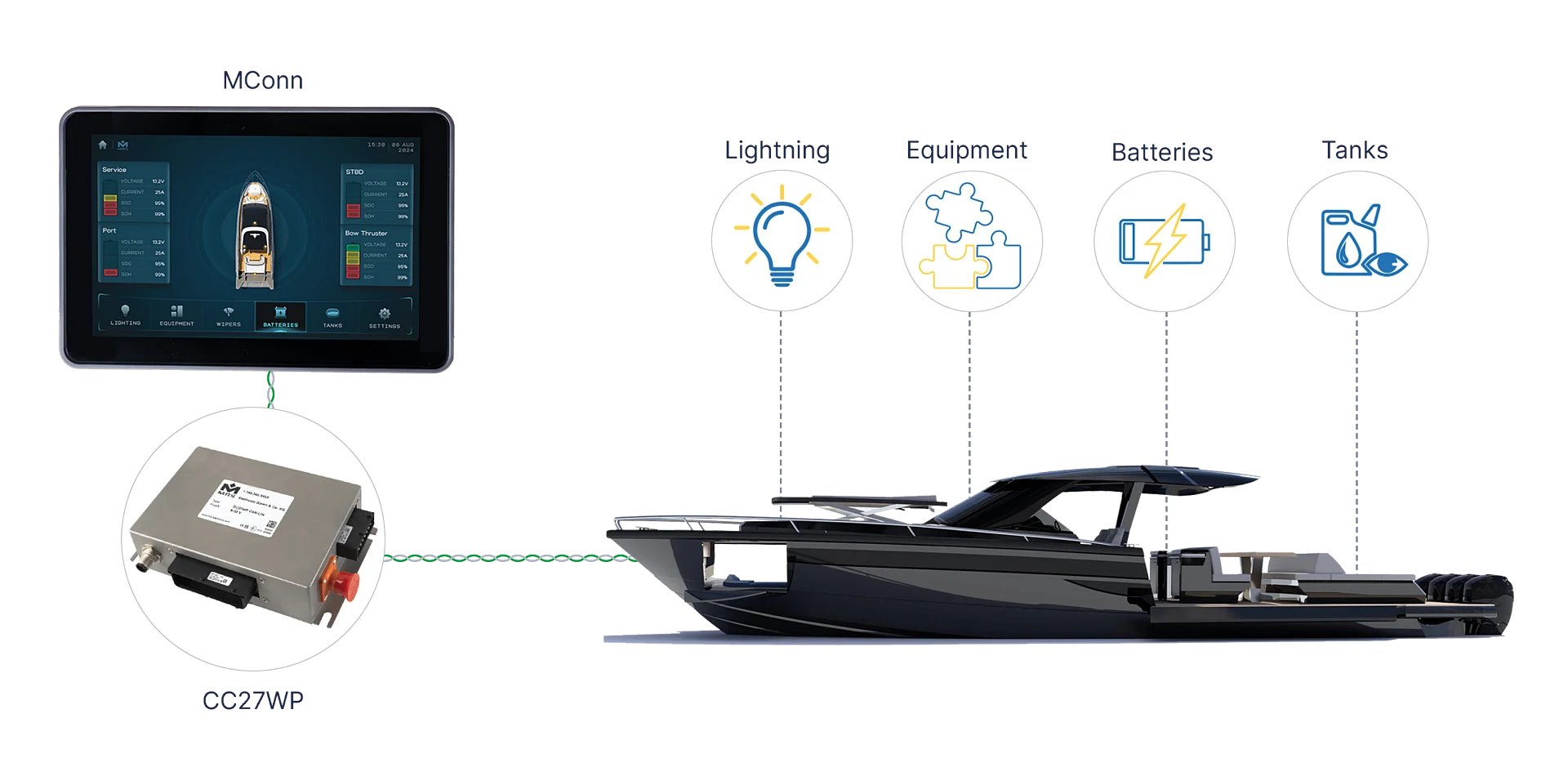
Replace complex wiring and traditional switch panels with programmable CAN-based controllers, HMI displays, and modular control units for lighting, pumps, batteries, tanks, and onboard equipment.
What is Marine Digital Switching?
Digital switching modernizes boat and yacht systems by replacing traditional switch panels, mechanical switches and long cable runs with efficient digital networks. Instead of wiring each onboard function directly to a physical switch, commands can be processed through programmable control units and intelligent digital interfaces.
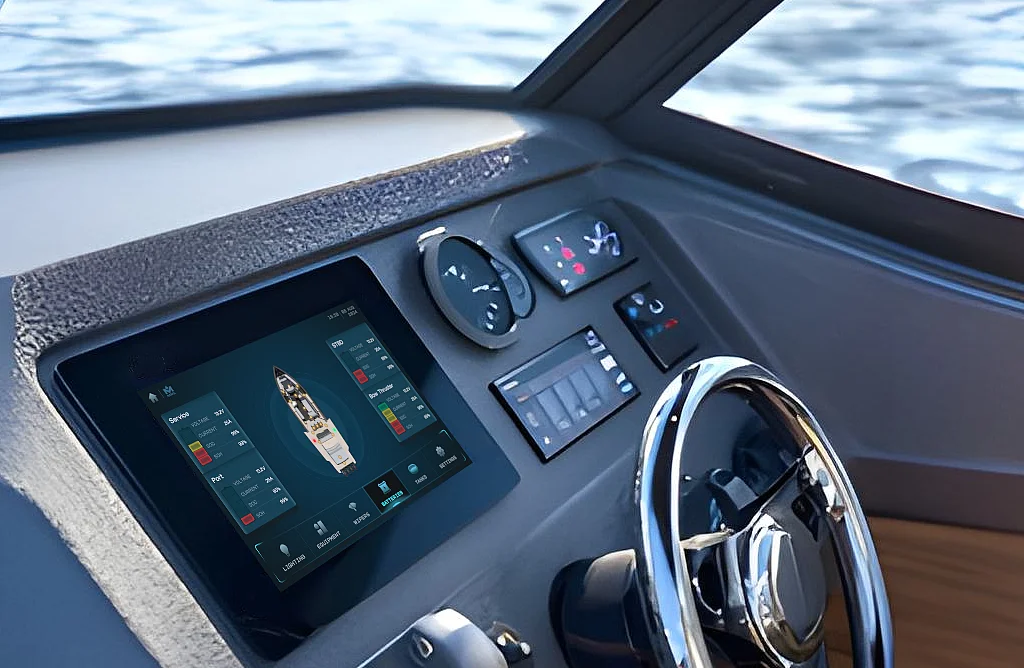
This allows onboard functions such as lighting, pumps, tanks, batteries and equipment to be controlled through a more flexible system architecture. By connecting displays, sensors, switches, and actuators through a CAN-based network, digital switching can help reduce cabling, simplify installation and enable centralized control of onboard functions.
Key elements can include:
- CAN-based programmable controllers
- HMI and touchscreen integration
- Modular control units for OEM and retrofit projects
The flexibility of this digital switching architecture allows the system to be adapted to different boat models, equipment configurations and retrofit requirements. MRS Marine supports boat builders, OEMs and system integrators with customized digital switching solutions for their marine systems.
Key advantages

Less wiring. Easier Installation.
Minimize cabling and reduce installation complexity. Our decentralized architecture allows flexible placement of modules throughout the boat.

Increased System Reliability
Our digital switching architecture eliminates mechanical points of failure. Built to withstand extreme marine conditions.

Intelligent Monitoring
Real-time diagnostics available through HMI displays or remote interfaces. Detect circuit status, current draw, fault conditions, before they become critical.
How it works
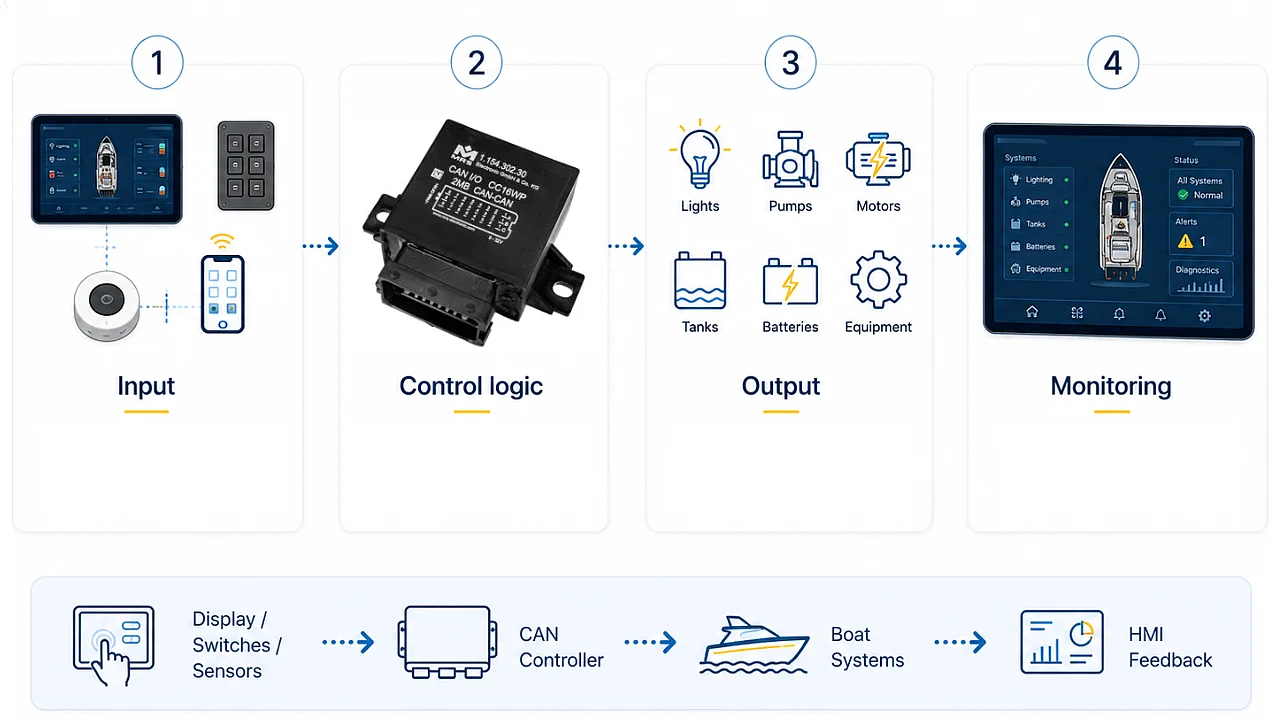
Control commands from digital panels or HMIs are transmitted via CAN to control units distributed throughout the boat. These units process the signals and manage connected functions such as actuators, lighting, and power modules, enabling intelligent automation and centralized monitoring. Feedback information can be displayed on the HMI for centralized monitoring.
1. Input: Touchscreen, switches, sensors, or app send commands. 2. Control logic: Programmable MRS controllers process signals via CAN and NMEA 2000.
3. Output: Lights, pumps, motors, tanks, batteries, or equipment are activated or controlled. 4.Monitoring: Status, alerts, and diagnostics are displayed on the HMI.
Smart Control at Sea
Forget endless switches and tangled wiring. With digital switching, every onboard function is at your fingertips, simple, intuitive, and reliable.
- Control lighting, climate, pumps, and safety systems from a single touchscreen.
- Create personalized scenes, from daytime navigation to evening ambience.
- Save energy and maximize comfort with smart automation.
- Free up space by replacing traditional switches and reducing installation complexity.
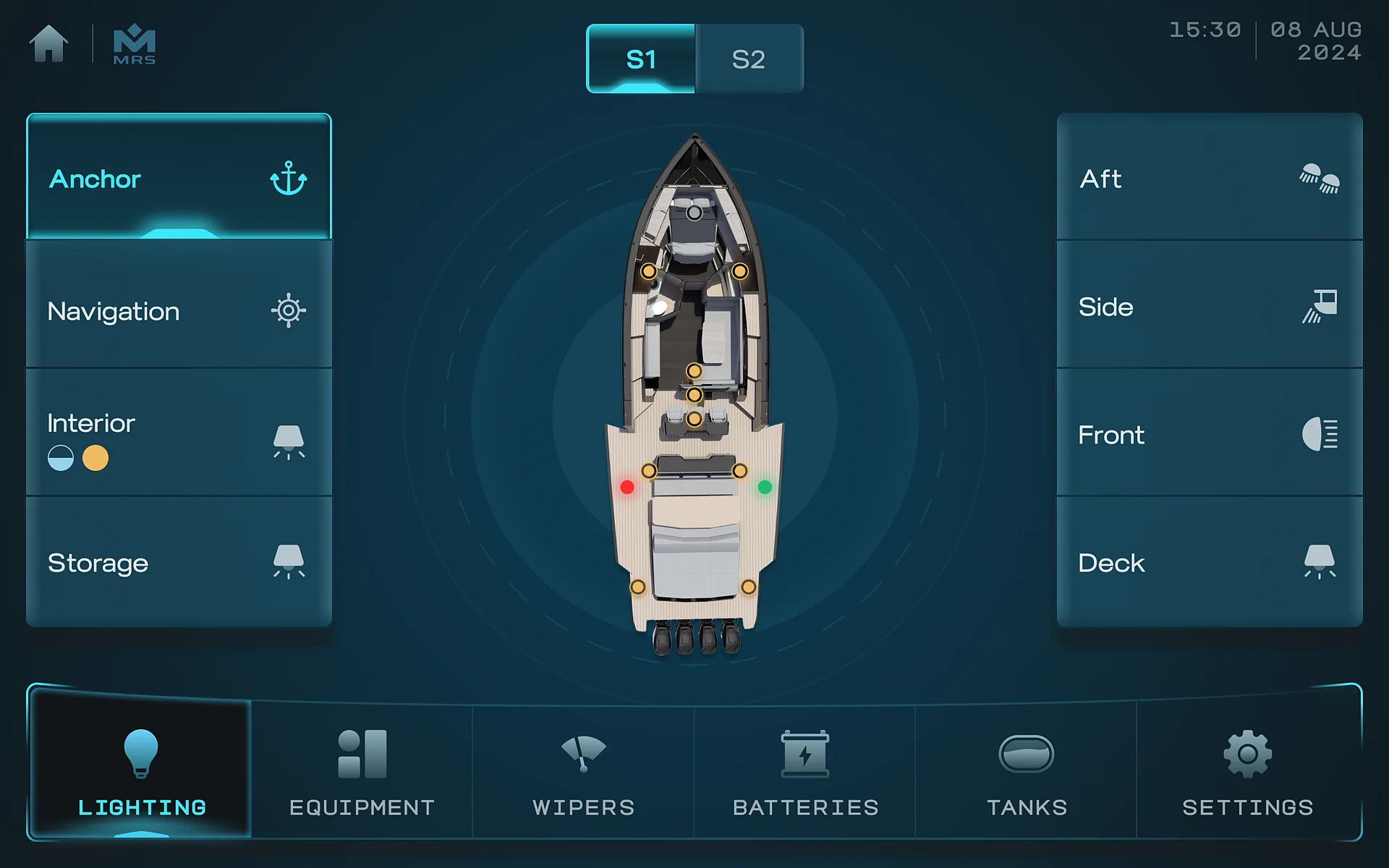
Digital Switching for Boat Lighting
- Intuitive digital switching for simplified onboard lighting management
- Supports lighting areas across the vessel, from functional to ambient use
- Enables smooth brightness adjustment in all key zones
- Seamless integration of exterior, interior and safety-related lighting systems
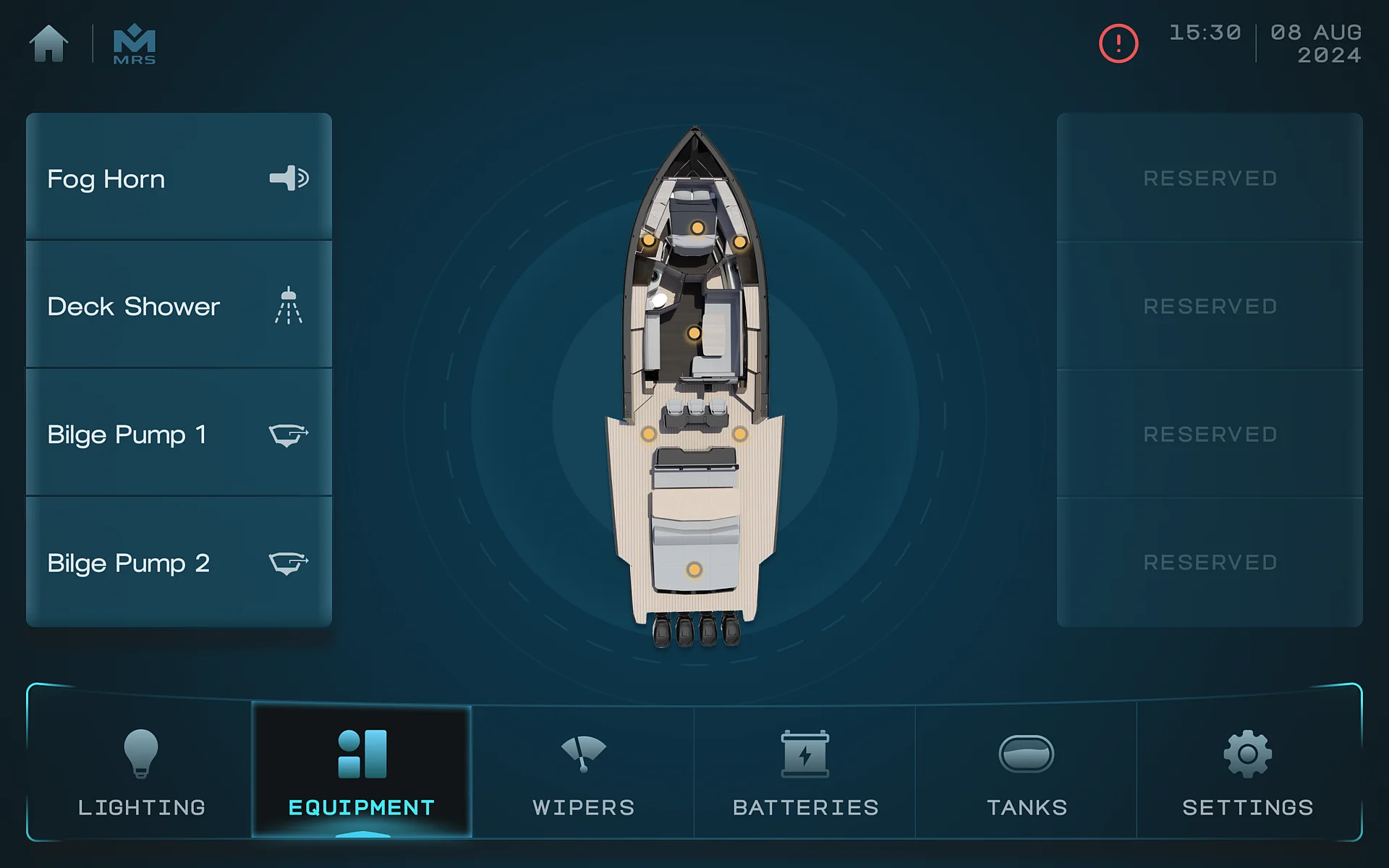
Digital Switching for Onboard Equipment
- Centralized digital control of essential onboard equipment (eg. pump control)
- Simplifies operation and reduces manual interaction across systems
- Provides clear system status and operational feedback
- Designed for reliable performance and seamless integration within the boat’s electrical architecture
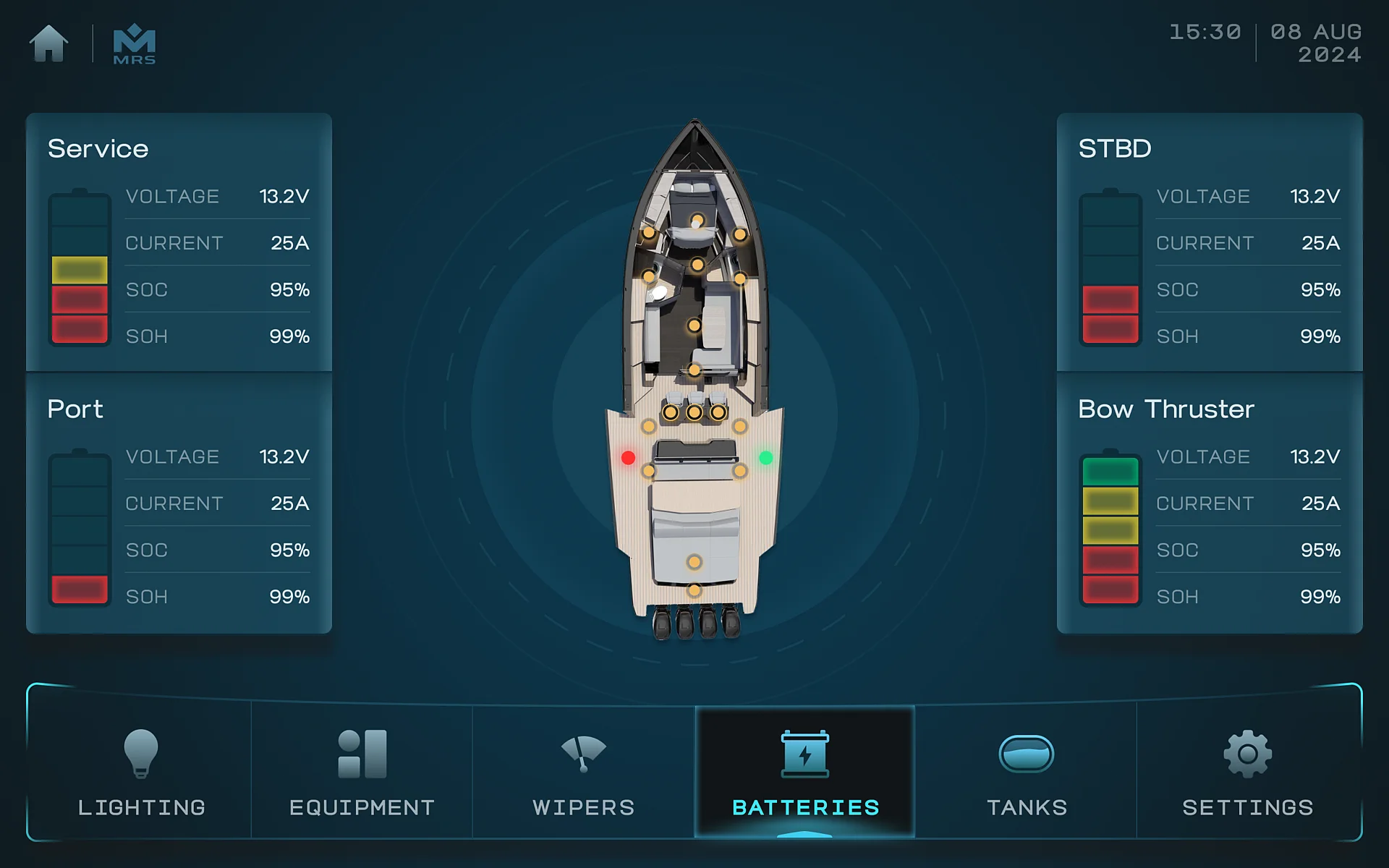
Digital Switching for Battery Monitoring
- Centralized digital monitoring and control of onboard battery systems
- Clear overview of system status to support efficient energy management
- Helps optimize power usage and improve overall system reliability
- Seamlessly integrated into the boat’s digital switching environment
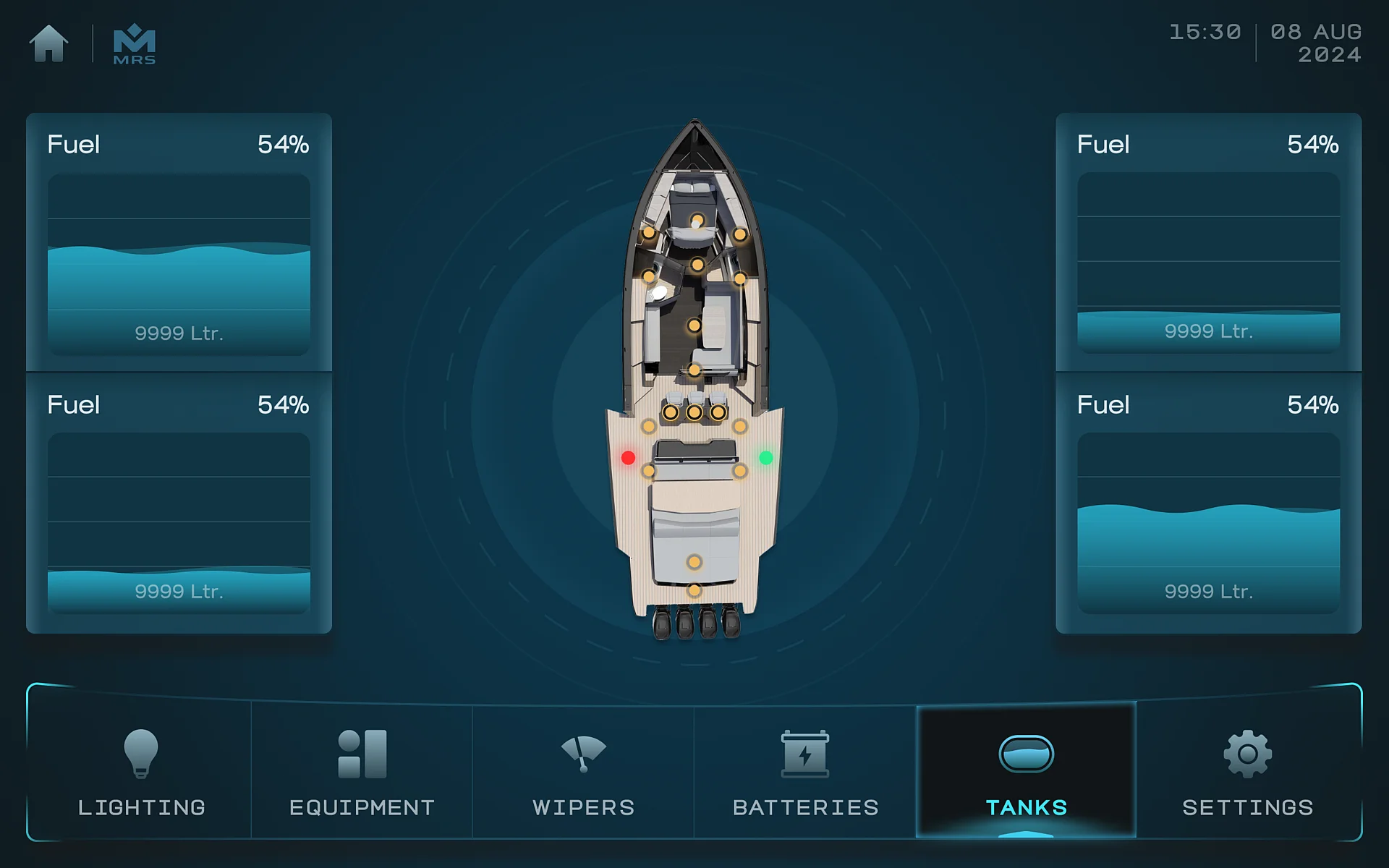
Tank Monitoring with Digital Switching
- Centralized digital monitoring of onboard tank systems
- Clear and intuitive overview of levels and system status
- Supports safer operation through timely information and alerts
- Fully integrated within the vessel’s digital switching architecture
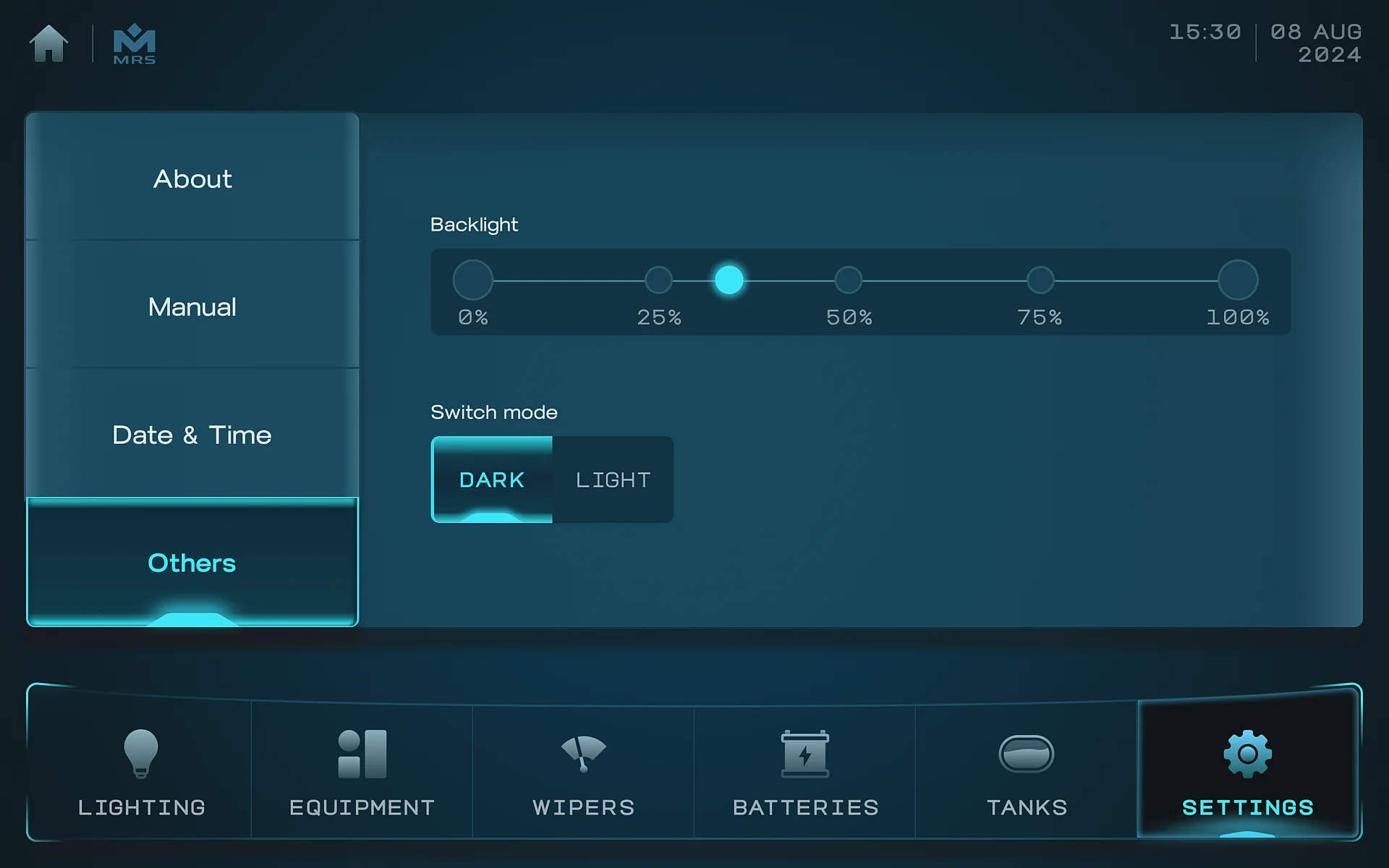
Digital Switching Settings and User Interface
- Customize system behavior and operational logic
- Adjust user preferences, alerts and access levels
- Enables flexible configuration for safe and efficient operation
- Access and safety parameters for controller and secure system use
FAQ
What can be monitored and controlled with MRS digital switching?
Almost every onboard electrical system can be monitored and controlled from a single display. This includes lighting, pumps, HVAC systems, navigation equipment, and safety systems. By replacing mechanical switches with solid-state technology, digital switching not only simplifies control but also enables automation - such as timed lighting scenes, automatic bilge activation, and integration with navigation data.
How does MRS digital switching integrate with existing marine electronics?
Digital switching integrates seamlessly with onboard marine electronics using standards like CAN bus or NMEA 2000®. It connects to multifunction displays, navigation systems, and automation platforms, enabling centralized control of lighting, pumps, HVAC, and more.
Can MRS digital switching be customized for different boat models?
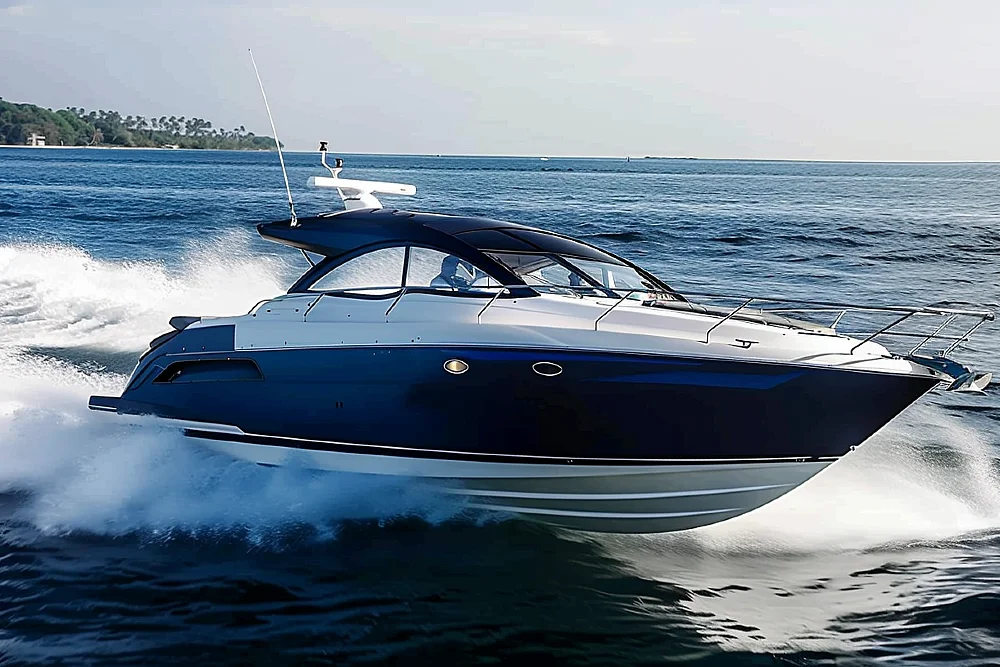
Yes. Digital switching platforms can be programmed to match the unique layout, functionality, and brand style of each vessel. From control labels and screen layouts to automation sequences and safety features, customization ensures a tailored user experience for every boat model.
What maintenance or updates are required for MRS digital switching?
Digital switching requires minimal maintenance, as there are no moving contacts to wear out. Software updates can add features or improve compatibility, and some systems support remote diagnostics to detect and resolve issues without bringing the boat into port.
Still have questions? Contact us and we’ll get back to you.